From labs to libraries — how Aramco Americas is supporting STEM learning in community spaces
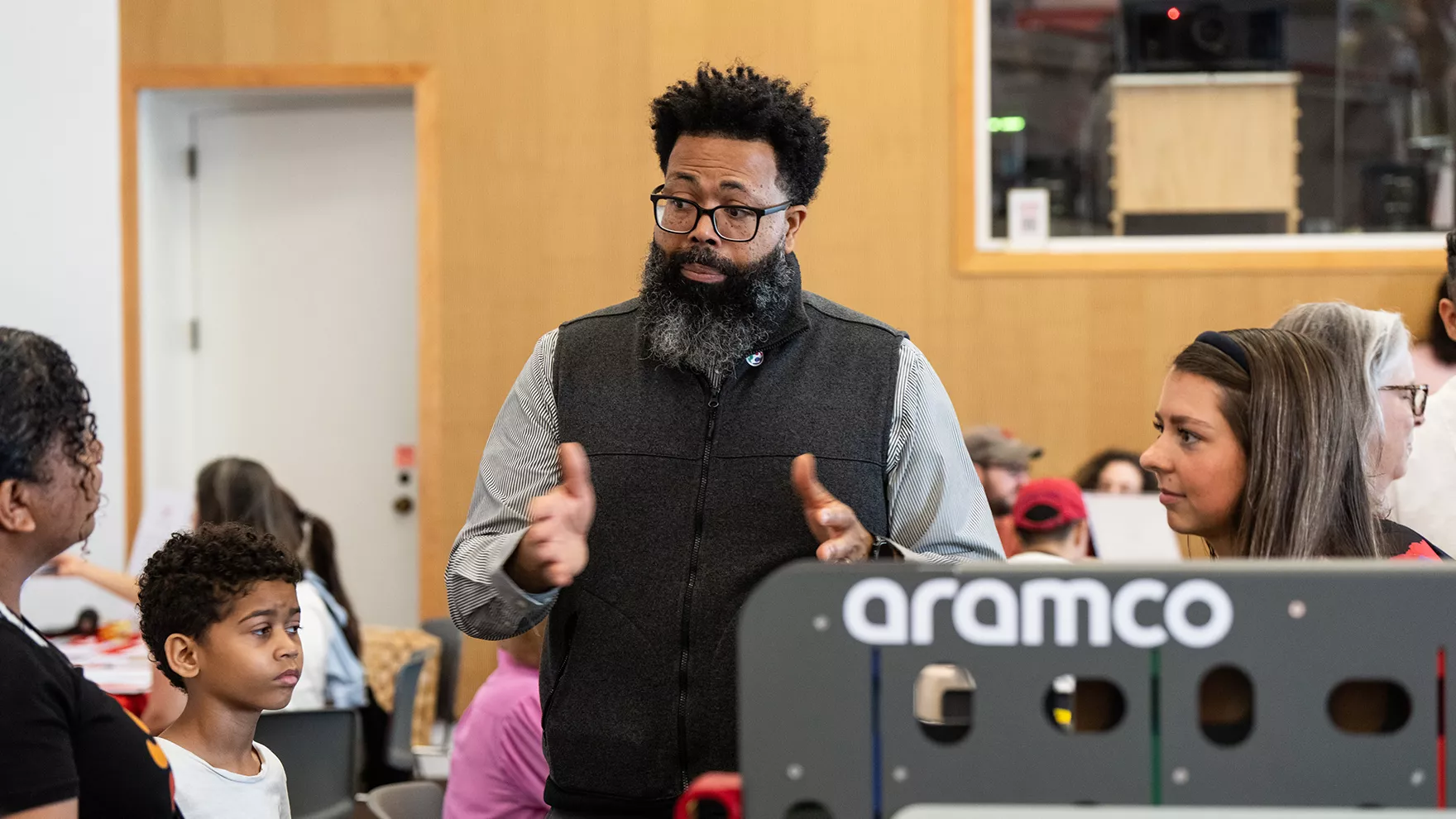
Rodney Williams of the Fab Foundation demonstrates a Fab-in-a-Box activity at the National Building Museum in Washington, D.C.
- Aramco Americas has partnered with the Fab Foundation on its ‘Fab-in-a-Box’ initiative, bringing portable digital fabrication tools into libraries, museums, and community spaces in the D.C. area
- Each of the four units — equipped with a 3D printer, laser cutter, and vinyl cutter — is quick to install and enables hands-on learning and creation opportunities
- By expanding access beyond traditional classrooms, the initiative helps lower barriers and widens who can participate in innovation
Where will tomorrow's innovators come from?
It's a question that sits behind many of Aramco Americas' STEM education partnerships. Across the U.S., the company supports initiatives that help young people discover science, technology and engineering through engaging, hands-on experiences.
"The workforce of the future is calling for more STEM-ready employees," says Blain Rethmeier, Public Affairs Acting Director for Aramco Americas. "Meeting that need means creating opportunities for young people to explore STEM, wherever curiosity can be sparked."
That philosophy is reflected in partnerships ranging from after-school STEM programs to university makerspaces to teacher training programs. Among the latest is a partnership with The Fab Foundation, specifically their Fab-in-a-Box initiative, a mobile digital fabrication unit designed to introduce advanced tools into everyday learning environments. Each compact unit can be rolled into a room, plugged in, and assembled on site, with training that enables educators and students to begin designing, printing, and making soon after.
As Rodney Williams, Program Manager for Education and Outreach for The Fab Foundation, explains: “You could have an idea one minute — making T-shirts, board games, stickers, signage, even holiday ornaments — and be starting a business within a few hours.”
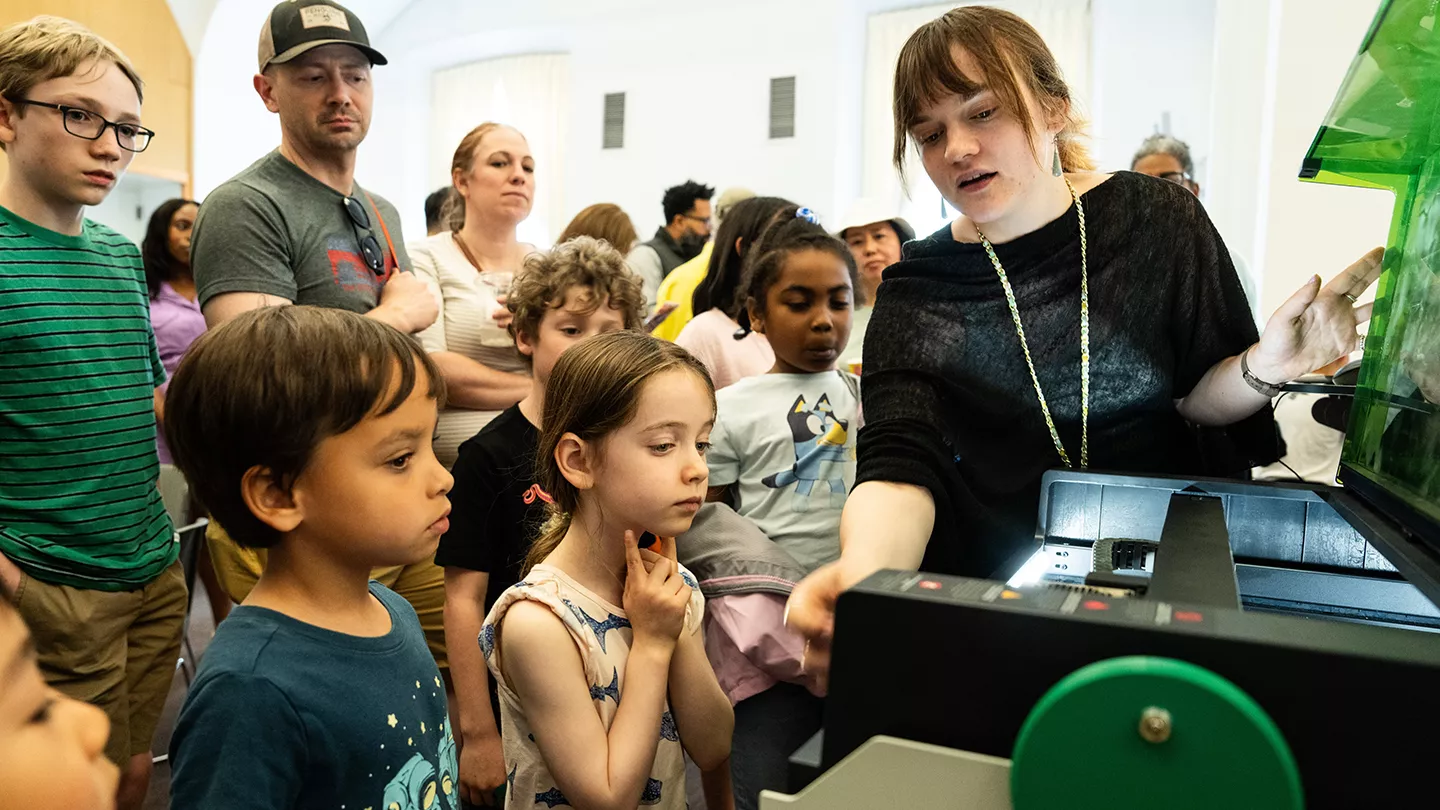
Children take part in a Fab-in-a-Box workshop at the National Building Museum in Washington, D.C.
The Fab Foundation provides access to digital fabrication tools through its global network of approximately 3,000 Fab Labs across 150 countries, but fully outfitted labs require dedicated space and investment. “We wanted to figure out a way to democratize access to these tools and spaces. With Fab-in-a-Box, we’re able to do that,” Rodney explains.
Originally focused on high schools in Mississippi and Illinois, the initiative is now expanding into four sites in Washington, D.C thanks to support from Aramco Americas.
"One thing we've reinforced through our STEM partnerships is just how important afterschool programs are," says Johnny Hanson, Acting Citizenship Supervisor at Aramco Americas. "You can't always reach students during the school day, or even in a school setting. That spark of interest still needs to happen — perhaps not in a lab, but in a library. Not in a specialist classroom, but in spaces people already use and trust."
Rodney says those conversations helped shape the program's expansion beyond schools.
"We really appreciated Aramco's openness to sharing their experiences," he says. "There are educators in all of these spaces. Libraries are often very tech-forward, and museums and community centers are designed for learning in a broader sense. By placing these tools there, you can reach not just students, but entire families. That broadens the impact significantly."
In Washington, D.C., that approach has led to installations at Martin Luther King Jr. Memorial Library, the National Building Museum, and two high schools: McKinley Technology High School and Columbia Heights Educational Campus.
Cultivating curiosity
At its core, Fab-in-a-Box is designed to make learning tangible; not every student learns best by reading a book, some need to build, draw, create, and make. Rodney explains that digital fabrication creates spaces for that kind of learning. “Students can tie subjects like math, science, reading, social studies and art into the process, then create something tangible. And from there, you get into innovation, entrepreneurship, problem-solving, and critical thinking.”
For Johnny, that hands-on element is key, and reflects a broader shift in how STEM education is evolving. “Young people are building technical confidence earlier,” he notes. “They’re developing problem-solving skills, creativity, and an ‘I can do it’ mindset — those are the foundations of innovation. So with Fab-in-a-Box, they’re building and experimenting. They’re making things. And that’s where the real connection lies. The ideas these students begin to explore could one day translate into real-world applications, from automotive innovation to advanced materials — that same process happens at Aramco research centers every day.”
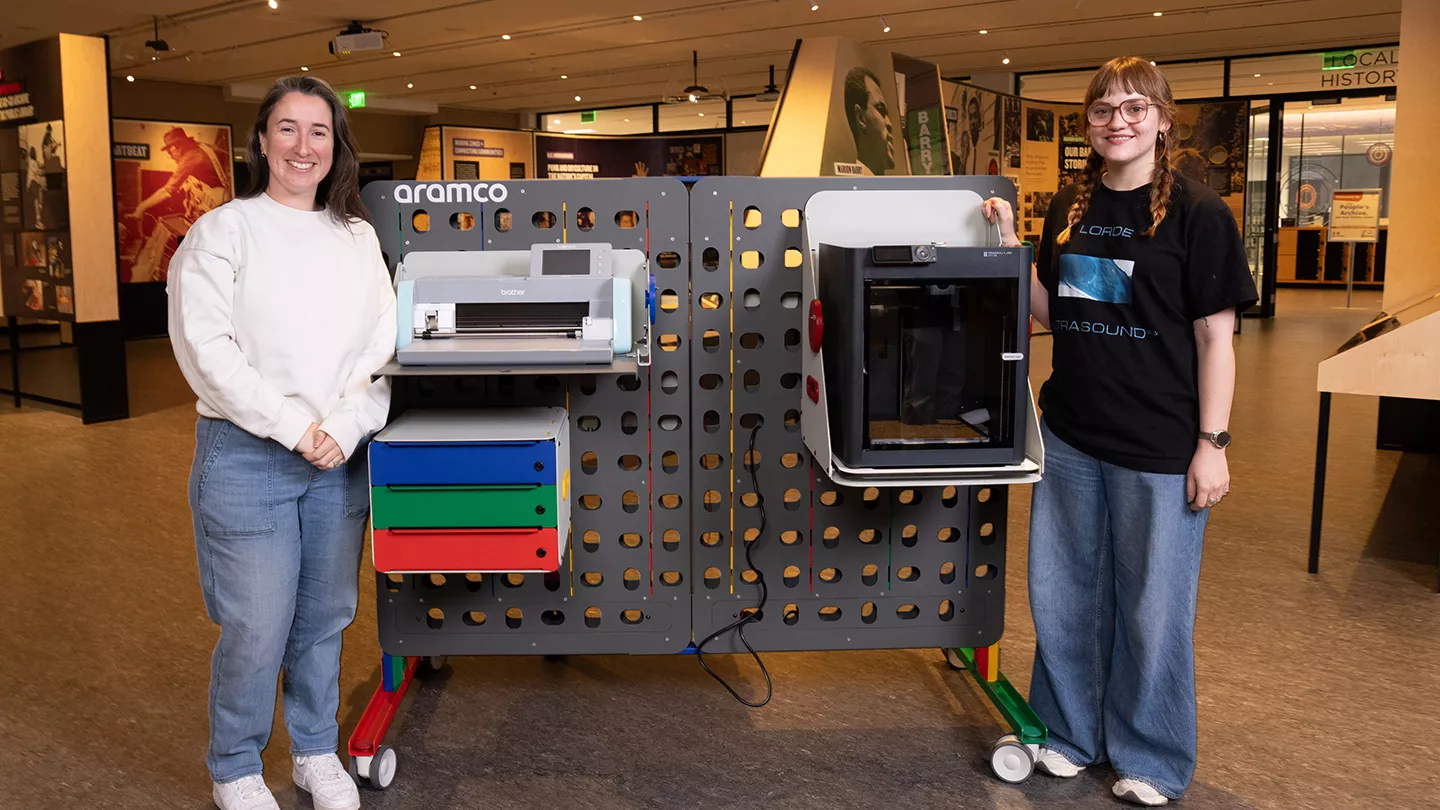
Kendra Jordan, left, and Colyar Trimble of the National Building Museum stand beside a Fab-in-a-Box installation during educator training at the Martin Luther King Jr. Memorial Library.
Johnny also sees Fab-in-a-Box as part of broader efforts connected to the energy industry’s wider work supporting STEM.
At universities, he describes a shift toward innovation ecosystems: Engineers, business students, designers are all working together. It’s no longer enough to teach a subject in isolation. Students learn in the classroom, then move into ‘makerspaces’ — hands-on labs where ideas take shape alongside other disciplines. Ideas don’t just stay theoretical, they become prototypes, patents, sometimes even startups.
He believes Fab-in-a-Box can become an entry point into that pipeline.
“Aramco has already supported this approach at the university level, including facilities like Aramco X Works at the Colorado School of Mines, and at Penn State, where initiatives help bring together disciplines that may have operated in silos. We have also supported Michigan Tech’s Enterprise Program lab, where students from across disciplines work on industry-sponsored projects; for example, their collaboration with our Detroit Research Center on advanced mobility.
Fab-in-a-Box introduces this same model much earlier. Students are experimenting and creating at an age where previous generations might not have had access to these tools.”
A partnership within a wider STEM ecosystem
The Fab-in-a-Box partnership is one example of Aramco Americas' broader support of STEM education. Across its corporate social responsibility portfolio, a common thread runs through each initiative: helping expand access to hands-on learning, from early exposure to higher education.
Nationally, Aramco Americas is part of initiatives such as FIRST Robotics, which aims to increase participation in STEM learning through afterschool programs. That focus on accessibility also extends to partnerships with institutions like the Michigan Science Center, where interactive exhibits and programming are designed to engage younger audiences.
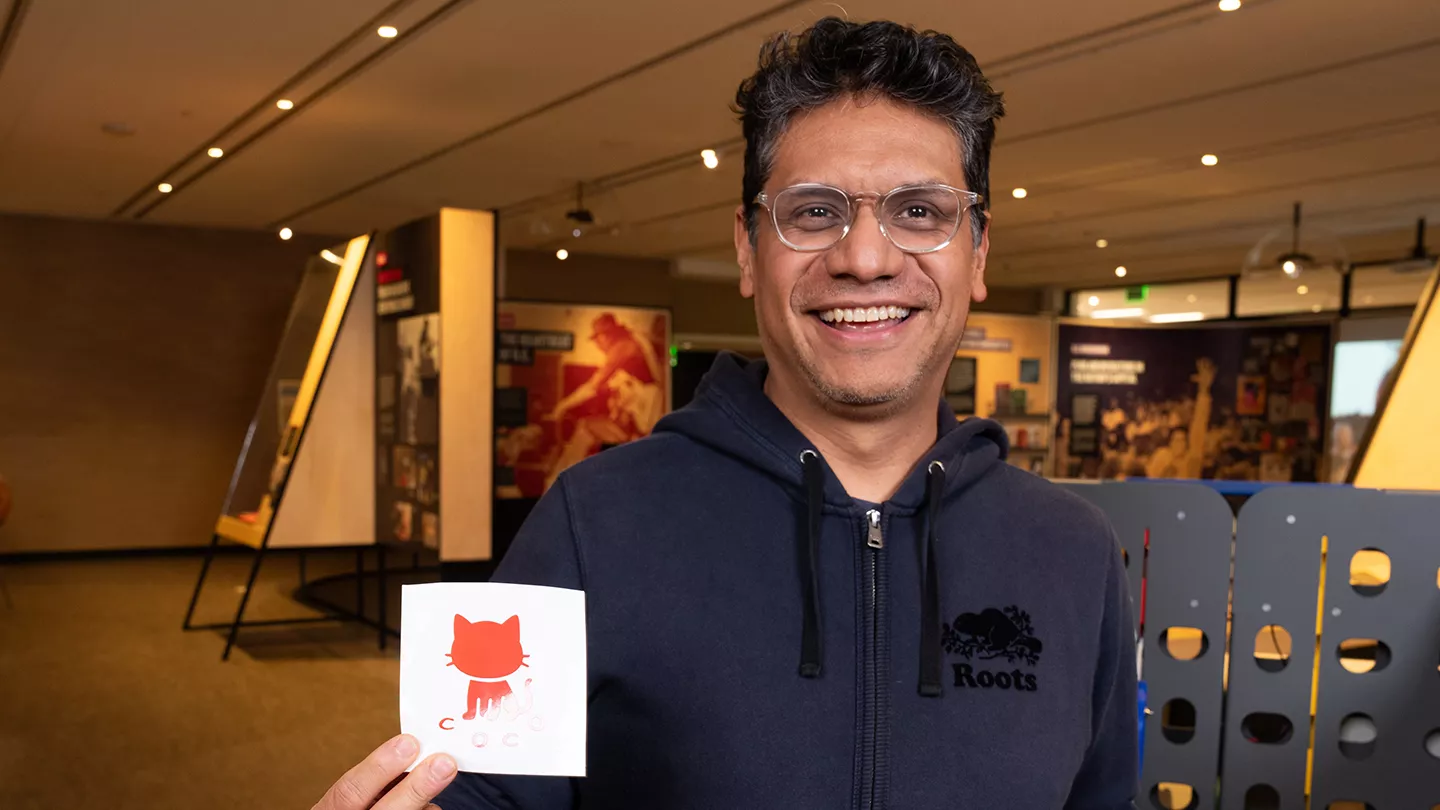
Juan Samperio of McKinley Technology High School displays a vinyl-cut sticker created during Fab Lab training at the Martin Luther King Jr. Memorial Library.
With initial installations now underway in Washington, D.C., both organizations are exploring how the partnership can expand. Houston is a natural next step, where Aramco Americas has already supported community-focused initiatives such as the TechLink digital library, a makerspace and digital workplace designed to provide access to technology and resources for local residents.
Rodney sees it similarly. “We’re looking forward to continuing this collaboration. The mix of schools, libraries, and community spaces is working well, and we’d hope to grow that.”
But for both organizations, success isn’t defined by numbers alone. As Johnny explains: “While evaluations and surveys can track participation — the number of students reached or teachers trained — it isn’t all data-driven. Our involvement is about engagement; each student we ignite curiosity in, that’s success.”
For Rodney, the impact is often immediate. “I think adults sometimes lose some of their creative energy, but kids still have it, and I don’t want creativity to be shut down through lack of access. I want kids to sketch something, design it, print it, handle it, and say, ‘I made that.’ That moment matters.”
For all the discussion around access, what stands out most is what happens when someone actually uses these tools, and discovers their potential in new ways. That moment — holding something they created from an idea — is powerful. That is when something shifts. It’s a reminder that these tools are not just educational. They’re enabling.
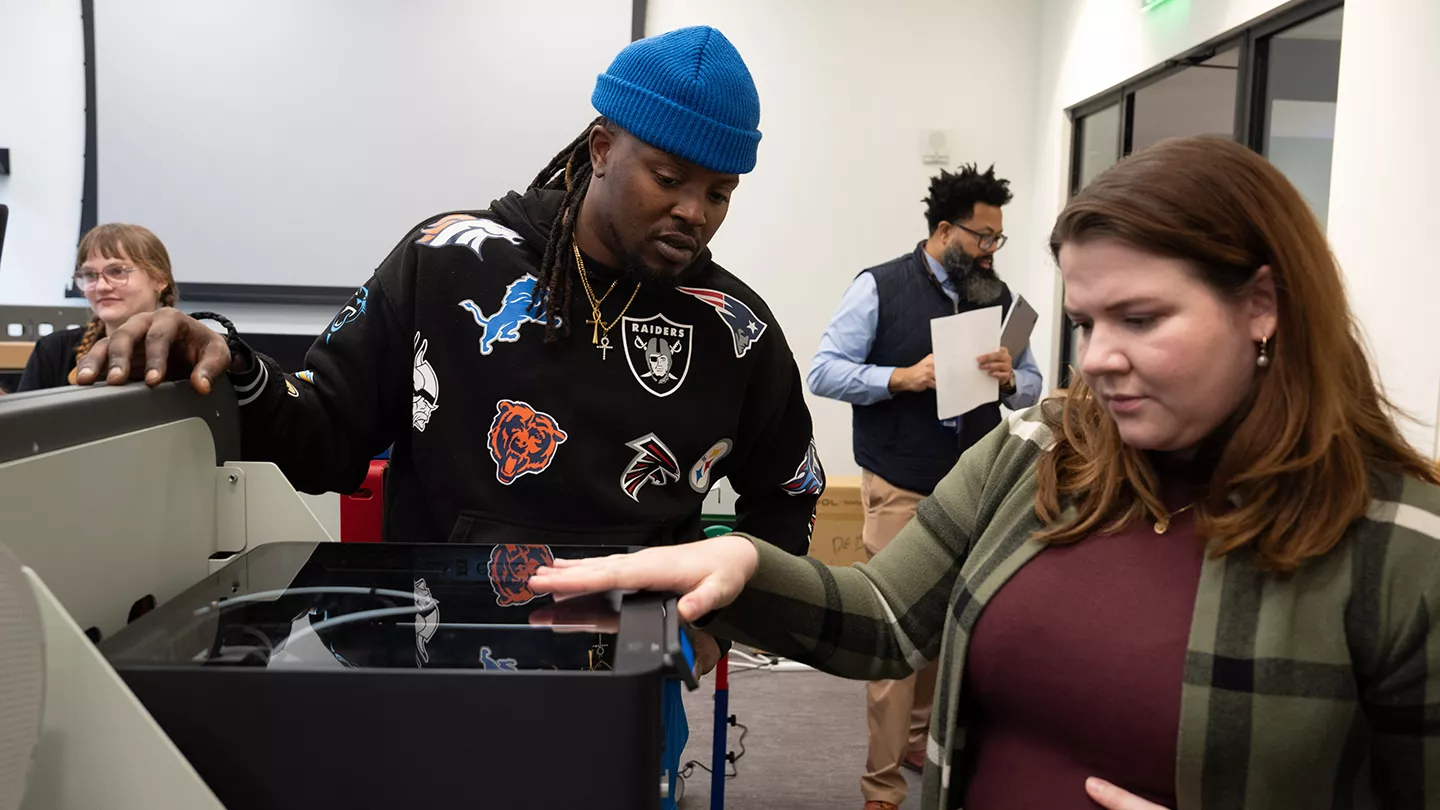
Abigail McCune, right, of the Fab Foundation and Kevin Hill of Columbia Heights Educational Campus test a 3D printer during Fab Lab training.