A nonlinear career isn't always about reinvention — sometimes it’s about staying curious
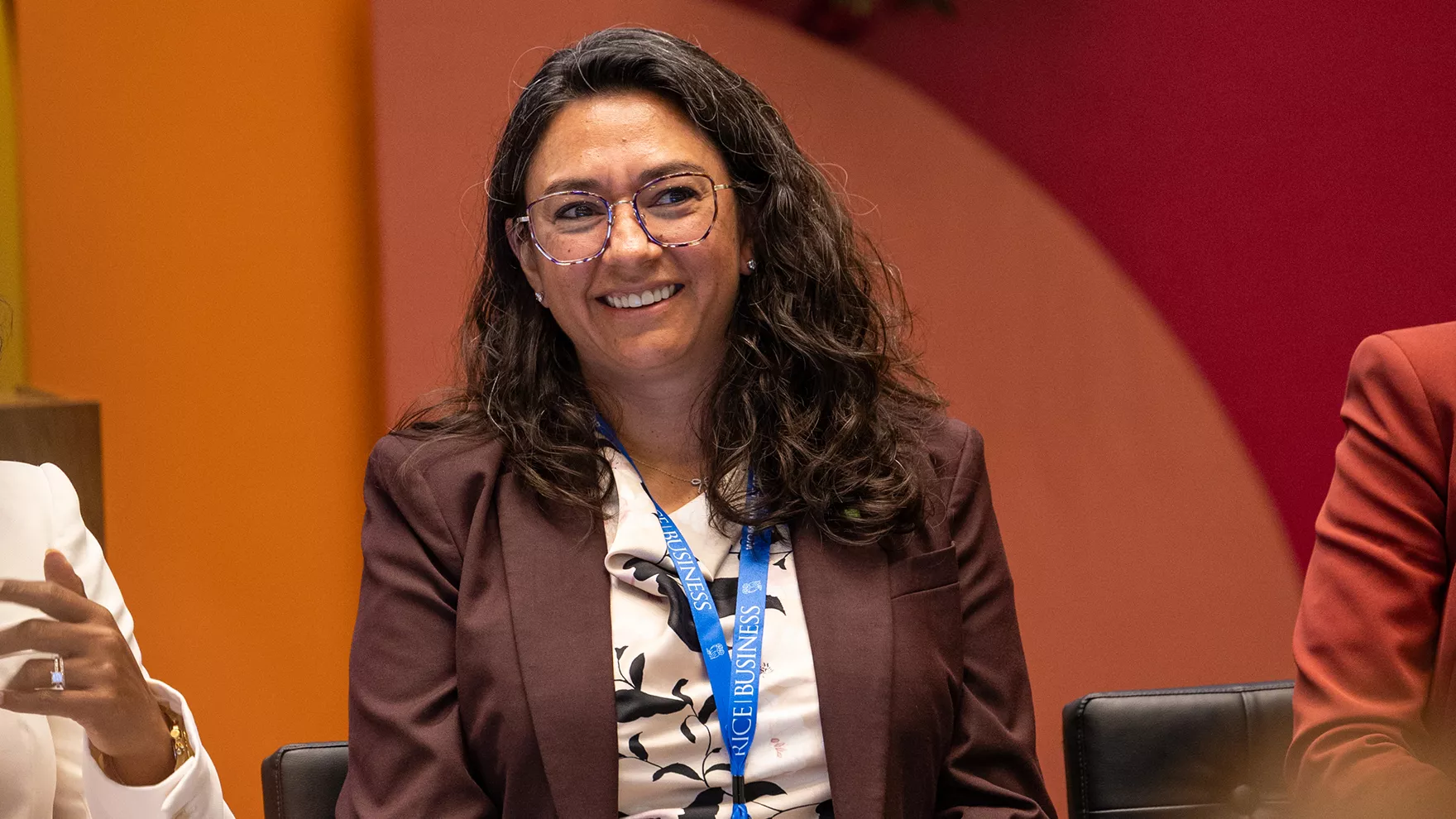
With more than a decade at Aramco Americas, including roles in internal audit, trading, and now finance leadership, Jansen has built her career through steady growth and an openness to change.
- Roxxanna Jansen, Acting Director of Finance at Aramco Americas, recently spoke at Rice University’s 26th annual Women in Leadership Conference on nonlinear career paths
- She spoke to us about her own journey, and how empathy, mentorship, and transferable skills shape career growth
- Not every nonlinear career is dramatic; some are built through incremental growth, curiosity, and trust
“Stay curious.”
It was a simple piece of advice shared by Roxxanna Jansen, Acting Director of Finance for Aramco Americas, during a panel discussion at Rice University’s 26th annual Women in Leadership Conference. But in many ways, it captures the philosophy that has shaped her career.
Held at McNair Hall and attended by more than 600 professionals, this year’s conference centered around the theme “Pass the Torch: Together, We Will Carry the Flame.” The program explored mentorship, leadership, and the many paths professional women take as they build their careers.
Jansen joined a panel titled “It Wasn’t a Straight Line: Nonlinear Career Stories,” where speakers reflected on career detours, unexpected opportunities, and the lessons learned along the way. While some stories featured dramatic reinventions, Jansen’s story stood out with a different perspective: that careers don’t always shift in big moments — they can evolve through curiosity, adaptability, and a willingness to keep learning.
With more than a decade at Aramco Americas, including roles in internal audit, trading, and now finance leadership, Jansen has built her career through steady growth and an openness to change. We spoke with her about her journey, the role curiosity and mentorship plays in shaping careers, and why confidence is often built one challenge at a time.
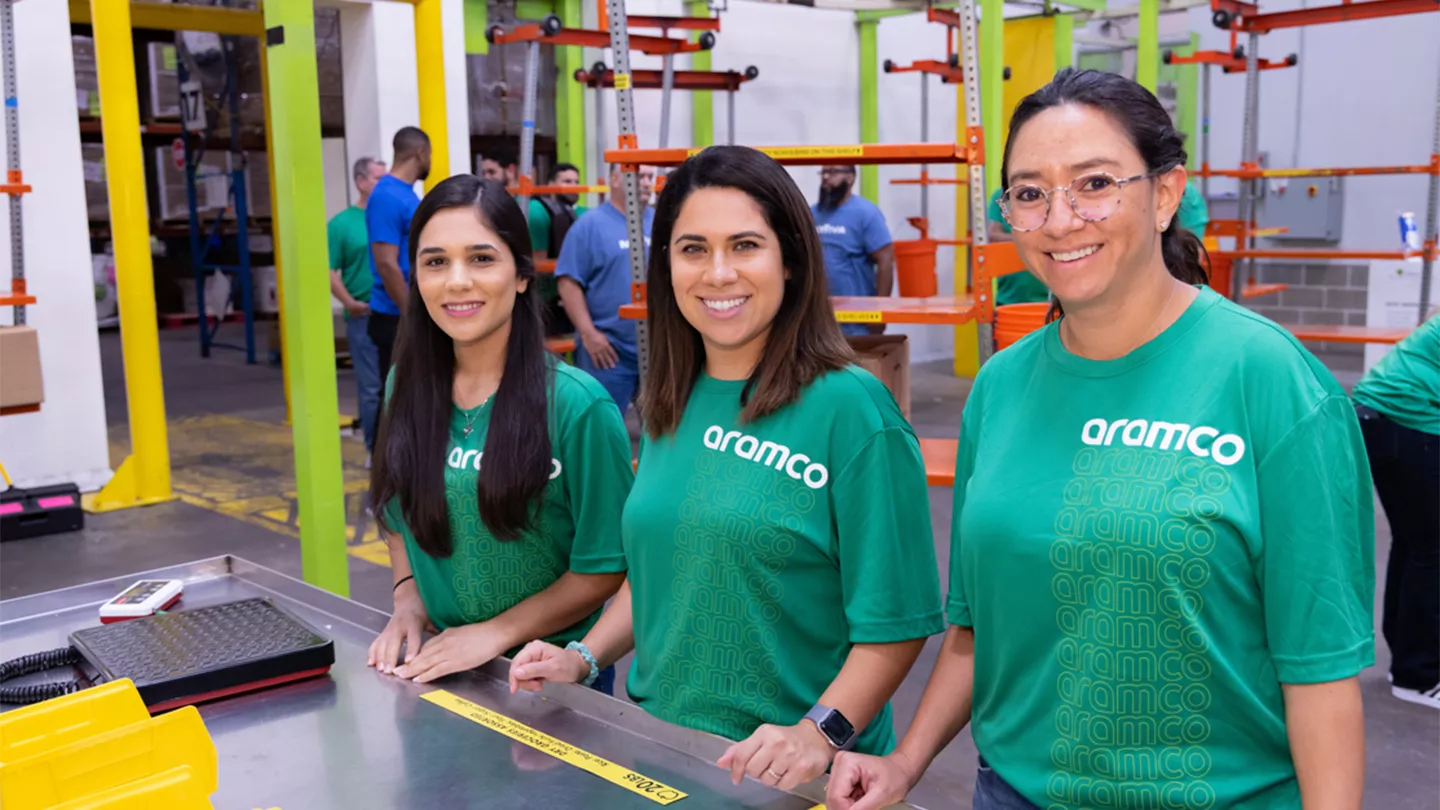
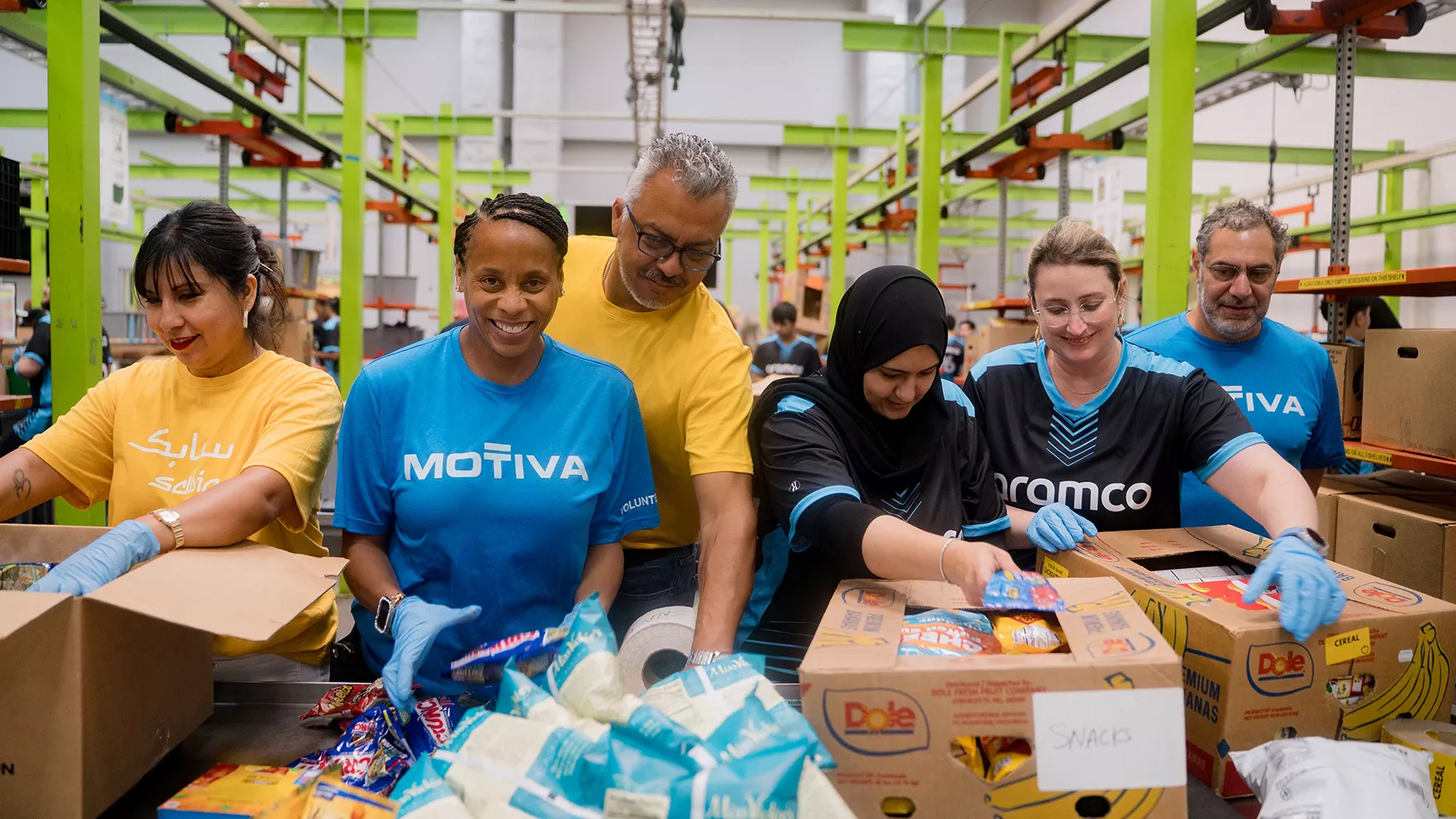
Roxxanna Jansen (on right) poses for a photo at the Houston Food Bank with other Aramco employee volunteers.
On nonlinear career paths
Aramco Americas Public Affairs (AAPA): You spoke on a panel about nonlinear careers. How would you describe your own journey?Roxxanna Jansen (RJ): I have to admit, I can’t really draw a line between being a child and graduating as an accountant. No child grows up wanting to be an accountant, so we’ll start there! But while I don’t think my career looked as dramatic as some of the stories shared on the panel, there were still important shifts along the way that shaped me professionally.
I started my career at PricewaterhouseCoopers (PwC), so my first real pivot came when I moved into internal audit at Aramco Americas in 2009. That shift changed my perspective; instead of just reviewing financials, I was working more closely with the business, learning how different parts of the company connect. Later, I moved into a Chief Auditor role at Aramco Trading Americas (ATA), which meant stepping into a new space; global commodity trading. That was challenging and — honestly — a little scary, but it was also a huge opportunity to learn.
More recently, I was asked by the then President of Aramco Americas to serve as the Acting Director of Finance, which I am still today. This role has been another significant shift, not just professionally, but in how I see myself. It was the first time I moved away from what I had essentially “grown up” doing, but I found I was still relying on the same core skills; learning quickly, working with people, and collaborating with my team. That experience reinforced for me that growth doesn’t always come from starting over, but from trusting that your skills can carry you through change.
So while my pivots weren’t necessarily dramatic, they’ve shaped how I lead today.
On confidence
AAPA: You mentioned that some of those pivots felt challenging; for many women in particular, there can be a tendency to second-guess or underestimate readiness. How has your confidence developed through those moments, and what helped you trust your judgment?RJ: Confidence is a tricky topic. You don’t feel the same level of confidence in every situation, and that’s okay. For me though, it comes back to transferable skills. In audit, you’re constantly stepping into new situations, learning quickly, and building relationships. You’re not always the expert — but you become an expert in learning.
That builds confidence over time.
Listening is also really important. When you truly listen, you understand what people need and how you can bring value. That helps build trust, and that trust builds confidence.
I’d say that overall, what has helped me learn to trust my judgement is by reflecting on the times I’ve taken on challenging opportunities and succeeded. But just as important is recognizing that failure is part of the process — that’s where you build resilience. Don’t be afraid!

Roxxanna Jansen participates in the Aramco Houston Half Marathon.
On mentorship
AAPA: Mentorship was a key theme of the conference. Was there someone who “passed the torch” to you at a pivotal moment — and how has that influenced the way you mentor others today?RJ: Oh, there have been so many inspirational people across my career, all of whom have shaped my approach to my own leadership. One mentor in particular really encouraged me to take on new and unfamiliar roles, which pushed me outside my comfort zone. And Dustin Duran, who I worked with closely in internal audit, helped me understand the company, the culture, and the importance of building and maintaining relationships. That focus on relationships has stayed with me. Whether you’re working through difficult issues or everyday decisions, trust and respect matter.
Now, I try to carry that forward. I believe in sharing knowledge openly and supporting others as they grow. Strong teams are built on trust, respect, and a willingness to learn together. That includes giving and receiving feedback, recognizing contributions, and creating space for people to develop.
On career development
AAPA: What has been most essential to your growth within Aramco Americas?RJ: Curiosity. Being open to learning new things and stepping into unfamiliar situations.
People often think of the energy industry in very specific ways — upstream or downstream — but there’s so much more to it. Procurement, research and development, engineering, all of these contribute to the bigger picture. Being part of that broader ecosystem, and understanding how it all connects, has been really important.
I’ve also learned the importance of believing in yourself. Taking a moment to recognize what you’ve achieved — and how you got there — helps build that confidence.
And alongside that, emotional intelligence. This was something we discussed as a panel at the Women in Leadership conference. Empathy, relationship building, motivating teams and the ability to navigate change — those are critical leadership skills today.
On building teams
AAPA: Finance is often seen as technical and numbers-driven. What part of your role is actually about people?RJ: A big part of it is about people. Even in a technical function like finance, the human element matters — when people feel supported, understood, and able to contribute, that’s when teams perform at their best.
But I don't do this alone; I work closely with colleagues across the team, and we all bring different perspectives and approaches. That’s what makes a team stronger — it becomes more than the sum of its parts.
When building a team, capability matters, of course, but so does culture. You want people who are open, collaborative, and willing to challenge as well as support each other. I also focus on creating opportunities for development — whether that’s training, new projects, or simply making sure people feel recognized and valued.
That sense of shared success is really important.

Roxxanna Jansen (second from far left) poses with other Aramco Americas employees at a team building event.
On industry and change
AAPA: The energy industry is evolving quickly. How is your team adapting to new technologies like AI and data analytics?RJ: Finance teams today aren’t just adopting new technologies — they’re responsible for making sure those changes are implemented in a controlled, thoughtful way. It’s not about changing for the sake of it, but understanding where technology genuinely adds value while maintaining strong governance.
The energy industry has always needed to be adaptable — responding to changes in technology, regulation, and strategy — and that mindset applies within finance as well.
For my team, yes, it’s about embracing new tools — for example, we use automation, AI agents, and Copilot tools to improve efficiency and enhance reliability across our processes. But it is also being disciplined in how we implement them; making sure changes are practical, controlled, and actually improve how we operate. A big part of that comes down to how we develop our teams, creating an environment where people are continuously learning, open to change, and confident applying new approaches in their day-to-day work.
On advice to early-career professionals
AAPA: Returning to the Rice Conference and its theme of “passing the torch,” what advice would you give early-career professionals who feel their path isn’t linear?RJ: I know it’s easy to say, but don't be afraid. All of the panel had interesting detours and it’s just something we sometimes have to do, right? Some of the best opportunities come from unexpected directions. You may not know where a decision will lead, but that’s often where the growth happens.
Yes, it can feel uncomfortable — you don’t always feel confident or ready — but you’re not alone in that. That was a shared message across the panel.
I'd also say to seek out mentors. They’re not always where you expect — they can be people you work with, people you admire, or even people you learn from at a distance. People you can look up to and say, “I want to do it that way.”
And… always stay curious!
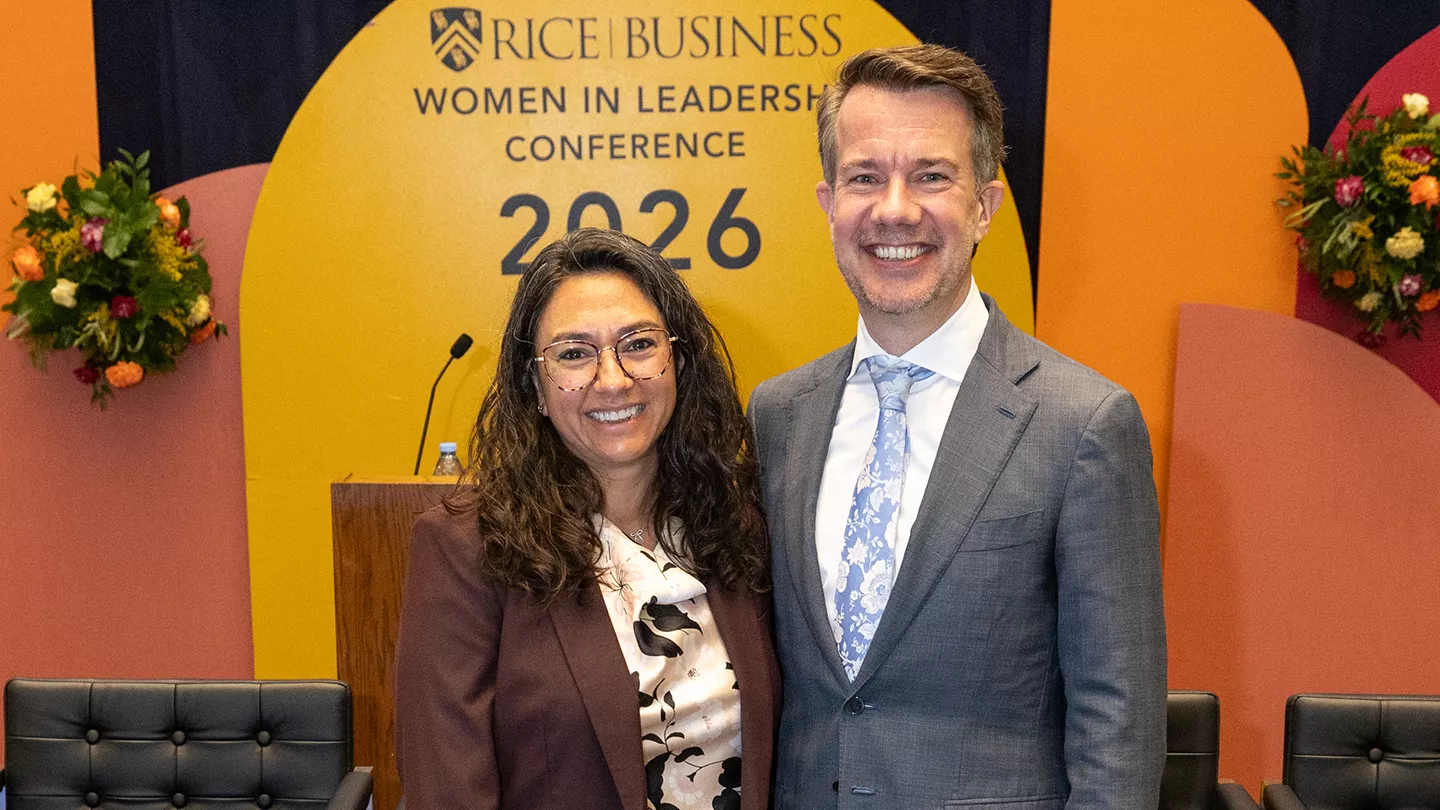
Roxxanna Jansen and husband pose for a photo at Rice University’s 26th annual Women in Leadership Conference on nonlinear career paths.
And finally
AAPA: On a personal note — your husband surprised you by showing up to watch your panel. How important is it to have that kind of support?
RJ: It meant a lot! I am very grateful for the support of my husband, who has been my biggest champion since the beginning of my career. He is always reminding me of strength areas that I may “overlook” or discount; having supportive people around you makes a big difference, giving you a different perspective, encouragement, and sometimes the confidence to keep going.
But I also think it’s important to build that confidence within yourself. Not everyone has the same support systems, and at times you have to rely on your own resilience — trusting your decisions, learning as you go, and backing yourself.
It’s really a balance of both.
---------
Aramco is engaged with Rice University in a number of ways: For several years as sponsors of the Women in Leadership Conference hosted by the Business School; with the Rice Alliance engaging with startups and innovation; as a member of the Ion (Rice University innovation incubator); engaged with Rice University’s Carbon Hub and Baker Institute for Energy Policy. The Houston-based University consistently ranks among the top 20 national universities, earns top recognition in Princeton Review Rankings and it is also known for its engineering and R&D.